Cnc Machining Milling Parts: Unlocking Efficiency and Complexity in Industrial Production
获取链接
Facebook
X
Pinterest
电子邮件
其他应用
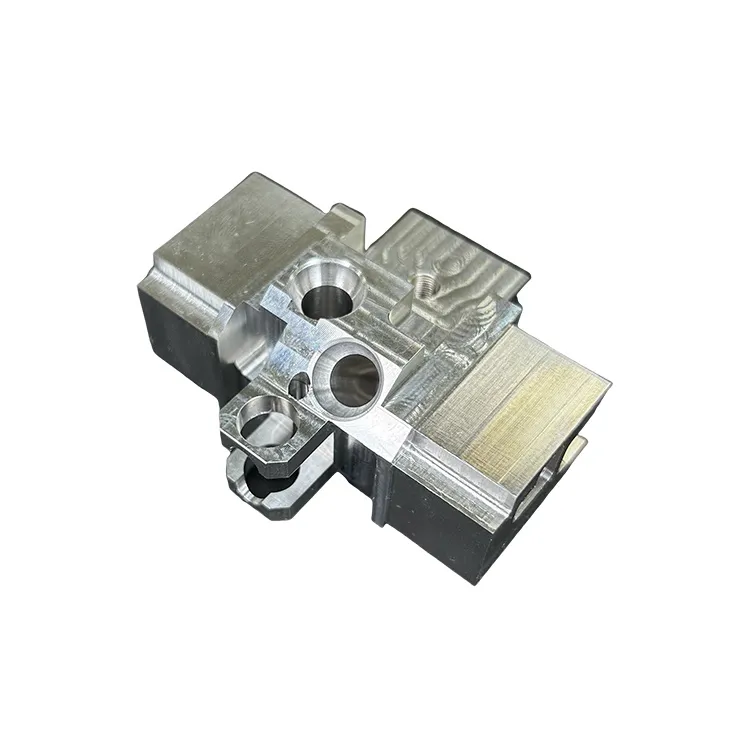
In the realm of industrial manufacturing,CNC machining milling partsstand as a testament to human ingenuity. This subtractive manufacturing process, which uses rotating cutters to shape materials, has evolved into a cornerstone of precision engineering. From prototyping to mass production, CNC milling deliversconsistent qualityanddesign flexibilitythat few other methods can rival.
The Art and Science of CNC Milling
CNC milling operates on a simple principle: a computer-controlled spindle guides cutting tools along X, Y, and Z axes to remove material from a workpiece. The result? Parts withmicron-level accuracy(±0.02mm) and intricate features like threads, slots, and curved surfaces . What sets it apart is its adaptability. Whether working withaluminum,stainless steel, orcomposites, CNC mills can carve out complex geometries that traditional machining methods struggle to replicate .
Advantages That Drive Innovation
Efficiency lies at the core of CNC milling’s appeal. Unlike manual machining, which requires constant operator oversight, CNC systems run autonomously, reducing labor costs and human error. For example, a single CNC mill can producehundreds of identical partsovernight, maintaining uniformity throughout the batch . Thecost-effectivenessis equally compelling: rapid prototyping with CNC milling cuts development time by 60%, allowing companies to iterate designs faster and bring products to market sooner .
Applications That Shape Industries
CNC machining milling parts are everywhere, from everyday consumer goods to cutting-edge technology. Inautomotive manufacturing, they createtransmission componentsandengine bracketsthat ensure smooth operation. Theaerospace sectorrelies on CNC milling forlightweight aircraft structures, while themedical fielduses it to fabricatesurgical instrumentsandimplantswith biocompatible finishes . Even theenergy industrybenefits, as CNC-milledturbine bladesoptimize power generation in wind and hydroelectric systems .
Choosing the Right Partner for Success
Selecting a CNC milling provider requires careful consideration. Look for companies withmulti-axis capabilities, such as 5-axis milling, which can handle complex 3D geometries in a single setup . AdvancedCAD/CAM softwareis another critical factor; tools likehyperMILL 2025automate toolpath generation and collision detection, ensuring optimal performance . Equally important ismaterial expertise—a reputable supplier should offer a wide range of materials, including exotic alloys and high-strength plastics, to meet diverse project needs .
The Future of CNC Milling
As manufacturing trends shift towardsmart factoriesandsustainable practices, CNC milling is evolving alongside them.AI-driven optimizationnow predicts tool lifespan and adjusts cutting speeds to minimize waste .Green manufacturinginitiatives, such as dry cutting and energy recovery systems, are reducing the environmental impact of milling operations . Meanwhile,hybrid manufacturing—combining CNC milling with 3D printing—allows for rapid prototyping of hybrid parts that blend the best of both technologies .
In a world where precision and speed are paramount, CNC machining milling parts remain an indispensable tool. Their ability to transform raw materials intohigh-performance componentswith unmatched accuracy and efficiency ensures they will continue to drive innovation across industries. Whether crafting a custom prototype or scaling production for a global market, CNC milling is the key to unlocking the full potential of modern manufacturing.
API 5CT tubing is a specific standard established by the American Petroleum Institute (API) that outlines the specifications for casing and tubing used in the oil and gas industry. This standard ensures that the materials and processes used in the manufacturing of these products are of high quality and suitable for the rigorous conditions found in oil and gas extraction processes. Understanding API 5CT tubing is crucial for professionals in the automotive and petroleum sectors, especially those involved in the production and implementation of oil transport systems. Primarily, API 5CT tubing is designed to facilitate the safe and efficient transport of oil and gas from subsurface reservoirs to the surface. The tubing serves as a conduit that protects the borehole from collapse and prevents the escape of hydrocarbons into surrounding formations. This not only ensures the safety of operations but also preserves the integrity of the environment. One of the key aspects of API 5CT tub...
4 WD tractors have revolutionized the agricultural industry, providing farmers with the power and flexibility needed to tackle a variety of tasks. From plowing and planting to harvesting and hauling, these machines have become an essential tool for modern farming operations. In this article, we will explore the versatility of 4 WD tractors and how they can be used for various agricultural tasks. http://www.flyeragro.com/ **The Benefits of 4 WD Tractors** 4 WD tractors offer several key benefits that make them ideal for a wide range of agricultural tasks. Their four-wheel drive system provides increased traction and stability, allowing them to navigate rough terrain and challenging conditions with ease. This makes them perfect for tasks such as plowing fields, planting crops, and towing heavy equipment. **Versatile Attachments** One of the main advantages of 4 WD tractors is their ability to be used with a variety of attachments. From plows and planters to sprayers and mo...
Before diving into its advantages, let’s clarify what makes this product unique. A Stacking Nestainer Pallet Rack is a hybrid storage solution that combines the stability of traditional pallet racks with the space-saving “nesting” design of collapsible containers. Unlike fixed racks that remain bulky even when not in use, this rack features a foldable or nestable structure: when empty, individual units can be nested into one another (reducing storage volume by up to 70%), and when loaded, they stack securely to maximize vertical space. It’s engineered to handle heavy loads (typically 500-2000kg per unit, depending on the model) while remaining lightweight and easy to maneuver—making it ideal for both long-term storage and short-term material handling. 5 Unbeatable Advantages of Stacking Nestainer Pallet Racks For warehouses, distribution centers, and manufacturing facilities, every square meter of space and every minute of labor counts. Here’s how Stacking Ne...


评论
发表评论